Lamination is the thin protective film applied to printed packaging that decides how a box feels in the hand, how it survives handling, and how premium your brand reads on the shelf. It’s one of the most common finishes in packaging and one of the most misunderstood, because “lamination” actually covers several distinct types and processes. This guide breaks down the main types of lamination in packaging, how the lamination process works, real examples, and how to choose the right one for your product.
What Is Lamination in Packaging?
Lamination in packaging is the process of bonding a thin plastic or specialty film to a printed paper or board surface. It serves two purposes: protection shielding print from scuffs, moisture, fingerprints, and wear and aesthetics giving the surface a specific finish and feel, from high-gloss shine to velvety matte. Lamination is applied after printing and is one of the final steps before a box is die-cut and assembled. Almost any printed carton, from a folding carton to a rigid gift box, can be laminated.
How Many Types of Lamination Are There?
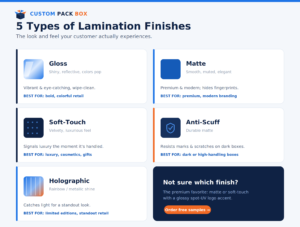
There are two ways to answer this, which is why the question comes up so often.
By finish, the main types of lamination are matte, gloss, soft-touch, and a few specialty options (like anti-scuff and holographic) the look and feel the customer experiences.
By process/method, lamination is generally categorized as wet lamination, dry lamination, and extrusion lamination the technical ways the film is bonded to the substrate in manufacturing.
For most brands choosing packaging, the finish types are what matter day to day, so we’ll cover those in depth, then explain the process types briefly.
The Main Types of Lamination (by Finish)
Gloss lamination. A shiny, reflective film that makes colors pop and adds vibrancy. It’s durable, wipe-clean, and eye-catching on a shelf ideal for bold, colorful branding. The trade-off: it shows fingerprints more and can look less “premium” than matte for luxury products.
Matte lamination. A smooth, non-reflective film that gives a soft, elegant, muted finish. It reads as premium and modern, hides fingerprints well, and provides a great base for spot UV contrast. It can make bright colors appear slightly subdued compared to gloss.
Soft-touch (velvet) lamination. A premium matte film with a velvety, tactile feel that signals luxury the moment the box is handled. It’s a favorite for high-end CBD, cosmetic, and gift packaging. It costs more and can scuff without an anti-scuff layer, but the perceived-value boost is significant.
Anti-scuff lamination. A durable matte film engineered to resist marks and scratches often paired with soft-touch or matte on dark-colored boxes (which show scuffs most). Ideal for packaging that travels or is handled a lot.
Holographic / specialty lamination. A film with a rainbow or metallic effect that catches light for a standout, eye-grabbing look used for limited editions and attention-first retail products.
Types of Lamination by Process (How It’s Made)
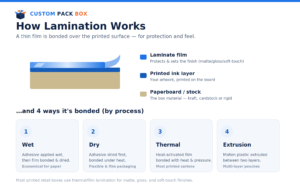
If you’re researching the manufacturing side, lamination methods include:
- Wet lamination adhesive is applied wet, then the film is bonded and dried. Economical for many paper applications.
- Dry lamination adhesive is applied and dried before the film is bonded under heat and pressure; common for flexible and film-to-film packaging.
- Thermal (heat) lamination a heat-activated adhesive film is bonded to the substrate with heat and pressure; widely used for printed cartons.
- Extrusion lamination molten plastic is extruded between two layers to bond them, used for multi-layer flexible packaging like pouches.
Most printed custom boxes and retail boxes use thermal/film lamination for the matte, gloss, and soft-touch finishes above.
Matte vs Gloss vs Soft-Touch: Quick Comparison
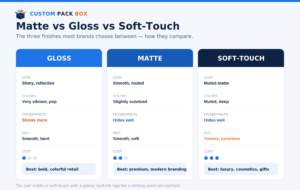
| Finish | Look & feel | Best for | Watch-out |
| Gloss | Shiny, vibrant, colors pop | Bold, colorful retail products | Shows fingerprints |
| Matte | Smooth, muted, elegant | Premium, modern branding | Colors slightly subdued |
| Soft-touch | Velvety, luxurious feel | Luxury CBD, cosmetics, gifts | Higher cost; add anti-scuff |
| Anti-scuff | Durable matte | Dark boxes, high-handling | Fewer “wow” aesthetics alone |
| Holographic | Rainbow/metallic shine | Limited editions, standout retail | Can look less premium |
Laminated Packaging Examples
Lamination shows up almost everywhere in retail: a glossy cereal or snack carton, a matte cosmetics box, a soft-touch premium CBD or perfume box, a holographic limited-edition drop, and flexible laminated pouches for coffee, gummies, or flower (where multi-layer lamination provides a barrier against light, air, and moisture). If a printed package feels smooth, silky, or shiny and resists fingerprints and scuffs it’s almost certainly laminated.
How to Choose the Right Lamination
Match the finish to your brand and product. Choose gloss if your branding is bold and colorful and you want maximum shelf pop. Choose matte for a clean, premium, modern look it’s the safe, versatile default for most CBD and wellness brands. Choose soft-touch when the unboxing experience and perceived luxury justify the added cost, especially for gift and hero products. Add anti-scuff on dark or heavily handled boxes. And reserve holographic for products that need to grab attention on a crowded shelf. A common premium combination is matte or soft-touch lamination with a spot UV accent, which creates a striking contrast between the muted background and a glossy highlighted logo.
Not sure which suits your product? Tell us your brand style and product, and we’ll recommend a finish and send a free sample so you can feel the difference. Request a quote or order samples.
Frequently Asked Questions
How many types of lamination are there?
It depends how you count. By finish, the main types are gloss, matte, soft-touch, anti-scuff, and holographic/specialty. By manufacturing process, the main methods are wet, dry, thermal, and extrusion lamination. For choosing packaging, the finish types (matte, gloss, soft-touch) are what matter most.
What are the different types of laminates used in packaging?
The most common are gloss (shiny, vibrant), matte (smooth, muted, premium), and soft-touch/velvet (luxurious tactile feel), plus specialty films like anti-scuff and holographic. Flexible packaging also uses multi-layer laminates for barrier protection.
What is the difference between matte and gloss lamination?
Gloss lamination is shiny and reflective, making colors vibrant and standing out on shelf, but it shows fingerprints. Matte lamination is smooth and non-reflective for an elegant, premium look that hides fingerprints, though colors appear slightly more muted. Matte reads as more upscale; gloss reads as more eye-catching.
Is soft-touch lamination worth the extra cost?
For premium, gift, and hero products, usually yes the velvety feel creates an immediate impression of luxury and can lift perceived value well beyond its small added cost. For everyday, price-sensitive lines, standard matte or gloss is often enough. Pair soft-touch with anti-scuff on dark boxes.
What are the 7 types of packaging?
Commonly cited packaging types are paperboard cartons, corrugated boxes, rigid boxes, plastic/poly pouches (like mylar), rigid plastic and glass containers, metal (tins/cans), and flexible film wraps. Lamination is a finish that can be applied to most paper- and film-based packaging among these.