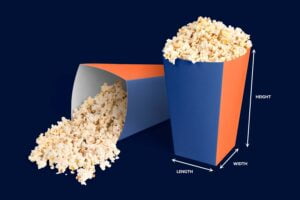
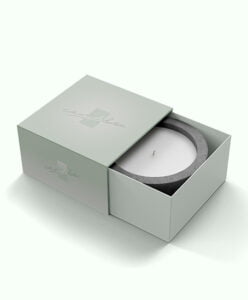
The moment a customer’s order arrives at their door, your packaging becomes your brand. It’s the first thing they touch, the first thing they photograph, and often the difference between a one-time buyer and a loyal fan.
At CustomPackBox, we help online stores turn a plain shipping box into an unboxing experience worth remembering. Here’s everything you need to know about ecommerce packaging and how to get it right.
What Is Ecommerce Packaging?
Ecommerce packaging is any material used to protect, ship, and present a product that’s sold online and delivered to a customer’s door. Unlike retail packaging that sits on a store shelf, ecommerce packaging has to survive the journey sorting facilities, delivery trucks, and doorstep drops while still looking great when it arrives.
Good packaging for ecommerce products does three jobs at once: it protects the item, it keeps shipping costs low, and it reinforces your brand every step of the way. When those three come together, you get fewer damaged returns, happier customers, and packaging that markets itself on social media.
Why Custom Ecommerce Packaging Matters?
Generic brown boxes get the job done, but they say nothing about who you are. Custom ecommerce packaging does the opposite: it tells your story before the customer even opens the lid.
Branded ecommerce boxes build recognition, create a premium feel, and encourage the kind of unboxing videos that spread across TikTok and Instagram for free. Studies consistently show that thoughtful packaging increases perceived product value and repeat purchase rates. For a small investment per unit, bespoke ecommerce packaging delivers marketing, protection, and loyalty in one.
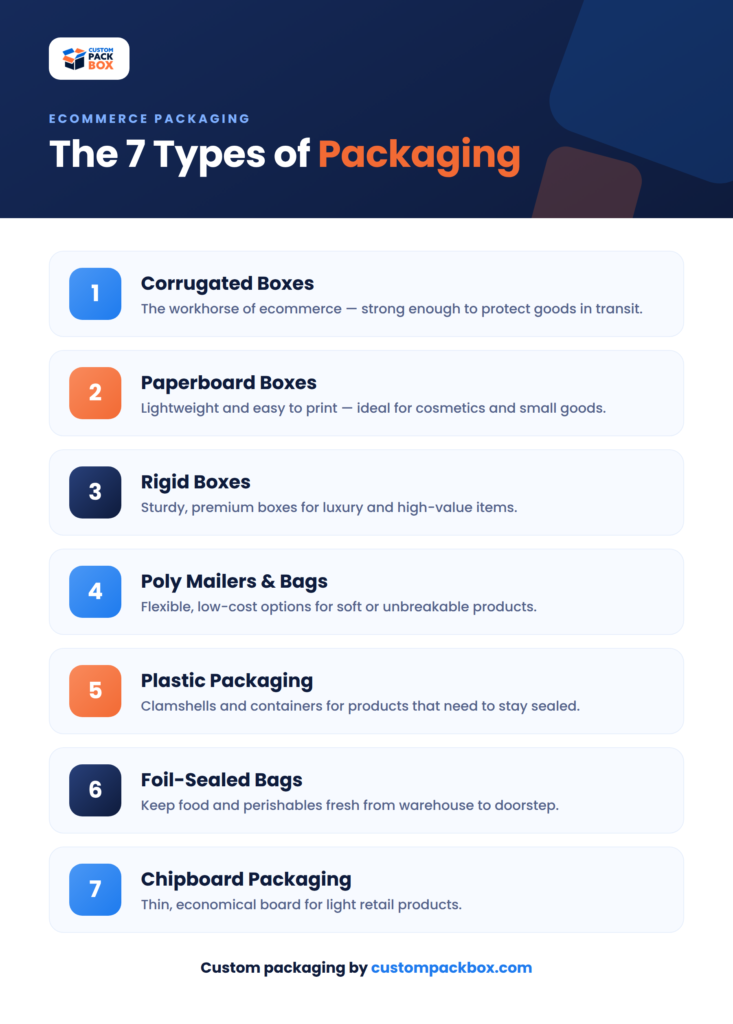
The 7 Types of Packaging
When people ask about the seven main types of packaging, they’re usually referring to the core formats used across retail and shipping:
- Corrugated boxes are the workhorse of ecommerce, strong enough to protect goods in transit.
- Paperboard boxes are lightweight and easy to print, ideal for cosmetics and small goods.
- Rigid boxes sturdy, premium boxes used for luxury and high-value items.
- Poly mailers and bags are flexible, low-cost options for soft or unbreakable products.
- Plastic packaging clamshells and containers for products that need to stay sealed.
- Foil-sealed bags used to keep food and perishables fresh.
- Chipboard packaging is a thin, economical board for light retail products.
For most online stores, corrugated ecommerce shipping boxes, rigid boxes, and poly mailers cover the vast majority of shipping needs.
Common Types of Ecommerce Packaging Boxes
Choosing the right box comes down to what you sell and how you want it to arrive:
- Mailer boxes — self-locking corrugated boxes that fold flat, perfect for subscription kits and branded unboxing.
- Shipping boxes — durable outer boxes built to protect heavier or bulkier items.
- Product boxes — printed retail-style boxes that double as ship-ready packaging.
- Rigid gift boxes — a high-end option for jewelry, electronics, and luxury goods.
Every one of these can be produced as custom ecommerce packaging boxes, printed with your logo, colors, and messaging inside and out.
What Are the 7 Types of E-commerce?
Packaging decisions often depend on your business model. The seven common types of ecommerce are: B2C (business to consumer), B2B (business to business), C2C (consumer to consumer), C2B (consumer to business), B2A (business to administration), C2A (consumer to administration), and D2C (direct to consumer). A D2C brand shipping monthly subscription boxes will package very differently from a B2B supplier shipping bulk orders and your packaging should reflect that.
How to Choose the Right Ecommerce Packaging
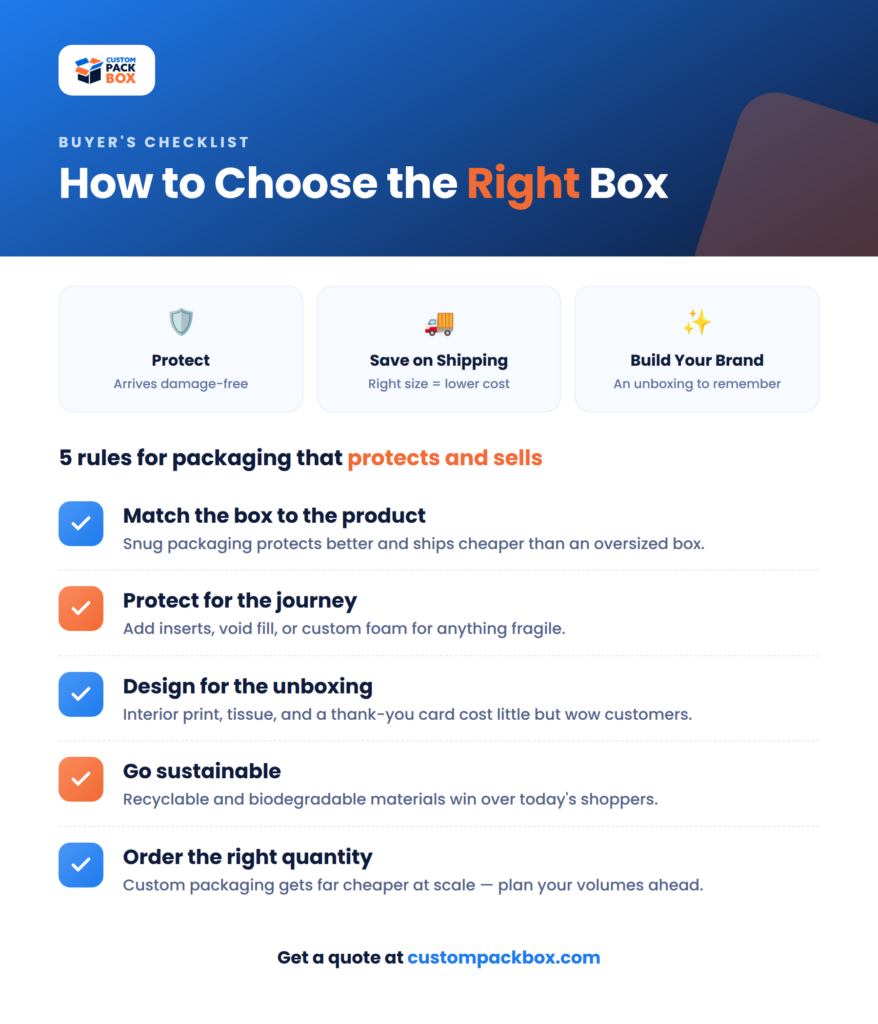
A few simple rules keep your packaging effective and cost-efficient:
- Match the box to the product. Oversized boxes waste material, raise shipping costs, and allow items to shift and break. Snug packaging protects better and ships cheaper.
- Protect for the journey, not the shelf. Add inserts, void fill, or custom foam for fragile goods.
- Design for the unboxing. Interior printing, tissue, and a thank-you card cost little but make a lasting impression.
- Go sustainable. Recyclable and biodegradable materials increasingly influence buying decisions, especially with younger shoppers.
- Order the right quantity. Custom packaging becomes far more affordable at scale, so plan your volumes ahead.
Getting Started With Custom Packaging
If you’re launching or scaling an online store, packaging shouldn’t be an afterthought. Start by identifying your best-selling products, their dimensions, and how fragile they are. From there, choose a box style, decide on your print design, and pick materials that balance protection, cost, and sustainability.
At CustomPackBox, we make it simple to design ecommerce packaging boxes that fit your products, your budget, and your brand. From mailer boxes to rigid boxes and everything in between, we handle the design, printing, and production so you can focus on growing your store.
Ready to upgrade your unboxing experience? Explore our custom ecommerce packaging options and request a quote today.